Showing posts with label Events. Show all posts

Wednesday, 26 March 2014

Conservation in Action - The State (of the) Bed

For the next couple of Wednesday afternoons for our Conservation in Action event, the house team are focusing on Mrs Wyndham's Bedroom, upstairs in the bedroom corridor.

Visitors to Petworth House on a Tuesday or Wednesday afternoon are able to see the guest bedrooms in the house, and perhaps the most often commented on piece of furniture is the State Bed in Mrs Wyndham's Bedroom.

The State Bed

Dating from the 1750s, the Rococo bed is attributed to James Whittle and Samuel Norman. It features crimson damask hangings and is painted and parcel-gilt (partially gilded). The carvings on top include ostrich plumes and great pierced shells; the dome topping the bed features a Chinese dragon and a very cute squirrel eating a nut!


The dome topping to the bed - spot the squirrel, and all sorts of other creatures!

It was created for the Second Earl of Egremont (1710-1763) and it was originally displayed in the State Bedroom downstairs (now the White Library, open on most Monday afternoons) before fashions for downstairs bedrooms changed in the 1770s.

When the Dowager Lady Egremont lived at Petworth, she would always sleep in the State Bed. In the 1980's when the bed was treated by the V&A Conservation team, they were flummoxed by a strange staining which was covering the top dome of the bed. Experts were called in - was it some kind of mould? In the end, they asked the family - it turned out that the Dowager kept a pet owl who liked to roost in the carvings at the top of the bed - and so would naturally leave droppings which had covered the top of the bed!
The bed underwent conservation treatment for the V&A's Rococo exhibition and the bed was subsequently moved from the State Bedroom into its current position in Mrs Wyndham's Bedroom.

When it comes to us cleaning the bed now, we use a soft ponyhair brush with a vacuum cleaner to remove the dust in the carvings. The damask is cleaned using a textile brush attachment on the vacuum, along with a piece of netting to limit the stress on the fabric, and a very low suction on the vacuum.
The fragile nature of the bed means that it is cleaned as little as possible - meaning there are quite large dust deposits being found on the top hangings!
Photography isn't allowed in the bedrooms, as they are still a private part of the house belonging to the family. So to see just how we clean the bed and the rest of the furniture, you'll just have to visit us! (We will be cleaning Mrs Wyndham's bedroom on the 26th March and the 2nd April).

Sarah
Conservation Assistant

Sunday, 23 March 2014

And we're off!

Paintings have been dusted; sculptures and ceramics have had their dust sheets removed; floors have been polished and buffed; copper has been cleaned and polished… even the spaniels have hidden themselves in ever-more tricky places to find! The 30 paintings that had been rehung for the ‘Constable at Petworth’ exhibition in the Square Dining Room, Somerset Room and Oak Hall were returned to their usual hanging places late on Friday night, once the last visitors to the exhibition had left. Witherington's 'Fete in the Park' has also had new lighting fitted to it, on a trial basis, joining the other paintings in the North Gallery which are being trialled for this lighting.
Following a successful winter clean, Petworth House opened its doors again on Saturday to welcome visitors back into the house. And what a beautiful weekend to welcome them with!
Daffodils in the Pleasure Grounds

Now that the winter clean has finished, the house team are busy preparing for the open season – replacing bug traps to monitor the pests and sorting out what we will be cleaning in front of the public this year for our Conservation in Action events,which will be happening every Wednesday afternoon (commencing from the 19th of March). This week will see us cleaning the state bed in Mrs Wyndham’s Bedroom.

The State Bed in Mrs Wyndham's Bedroom

We do hope to welcome you to Petworth soon!
Sarah
Conservation Assistant

Friday, 20 December 2013

Face to Face with Reynolds

Last week the house team were busy moving paintings, in preparation for the 'Constable at Petworth' exhibition which starts on January 11th 2014.

The Somerset Room and Square Dining Room will be open during the exhibition, but will look very different to how visitors will have seen them in the past. Much of the artwork has been redisplayed in order to show paintings that would have inspired Constable during his stay at Petworth in 1834.

Taking down a number of paintings from the North Gallery so they can be redisplayed in the showrooms open during the exhibition.

Taking down a painting from the Square Dining Room - those on a lower level require as many hands as possible to safely lower and remove the painting. Those higher up require ropes and pulleys to get them down. 

On top of this, the lighting consultants who visited the property earlier in the year have been back to the house, to add further lighting to some of the paintings which will be on display. The pictures look fantastic!

Newly-instated painting, with new picture light
Two paintings now installed for the exhibition in the Square Dining Room - my camera does not do these paintings justice; the lighting illuminates them beautifully.
One of the biggest jobs (quite literally) in the Square Dining Room was the lighting of the Macbeth and the Witches. When I last wrote about this painting, conservators were at Petworth determining what could be done to improve the visuals of the painting. The painting will be going away in April for this conservation work, but part of the project includes having the canvas properly lit.

Here the lights have been fixed to the top of the Macbeth. You can already see the difference it makes to the detail visible on the canvas - as well as how well it lights compared to the older picture lights (for example those down the right hand side, which unfortunately inclue a lot of glare and a lit circle from the light).
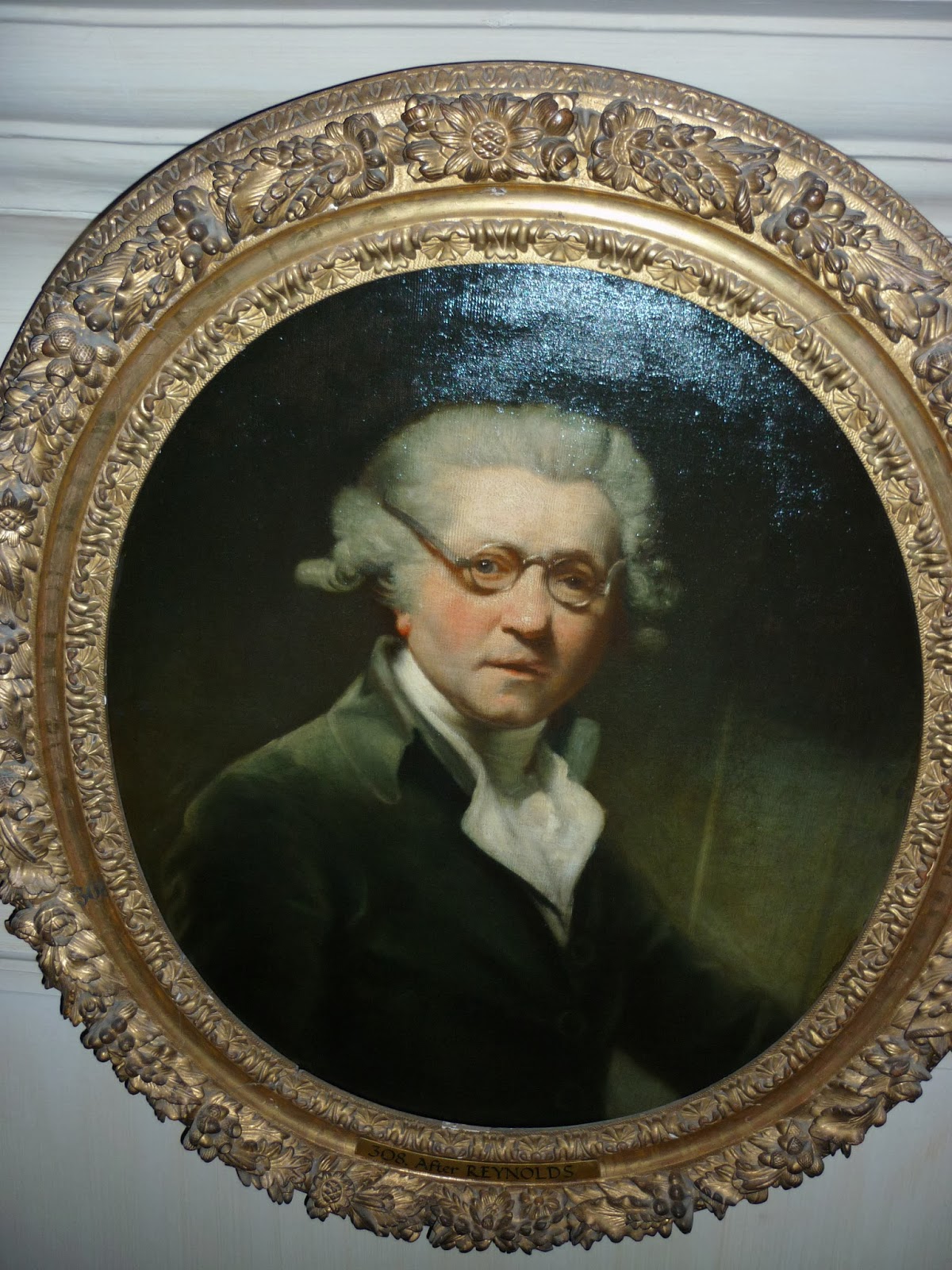
Having the lighting consultants in also meant we were able to get the scaffolding right up close to the portrait of Reynolds himself – who will look fantastic when he is lit properly lit.

The photo is rather distorted (the inherent problems of dealing with scaffolding and cameras!) but it does bring out the detail in the portrait of Reynolds which it is currently very difficult to see, due to his dark location above the Macbeth! We look forward to seeing him properly with picture lights in a few months time.
Do come and see the changes that have been made for the exhibition - as well as, of course, the fantastic collection of over 40 watercolours and oil paintings by Constable which are being exhibited together for the first time in our exhibition room. Many of these paintings were produced by Constable during his visit to the house in 1834. The Old Library - usually closed to the public - will also be open to those visiting the exhibition. Booking is essential - click here for more information and to book tickets.

We hope to see you in the new year for the exhibition!

Sarah
Conservation Assistant

Wednesday, 20 November 2013

Brasso, Beeswax and Elbowgrease: Petworth House Undercover

This week has been a bit different for the conservation team as we have been running tours in the house during our winter clean.

These specialist tours take visitors through areas we are currently cleaning and beyond, offering the chance to see behind the scenes and meet the conservation team, both staff and volunteers.

We have been encouraging visitors to ask questions about how we care for the collection during winter. We have had a number of familiar questions – such as what we use to clean the collection and the policies of the National Trust on preventative conservation. But we have also had some more - how shall I put it – peculiar, questions, as well as interesting suggestions on how we could be cleaning the collection!

Volunteer tour guide Chris and Conservation Assistant Michelle talking to visitors in the Somerset Room. We opened up the Boulle-work writing desk to show off its beautiful tortoiseshell interior. They loved being able to see the inside of the desk, which is usually closed. It was the first time Chris had seen it too!

Volunteer Conservation Assistant Tasha talking in the Square Dining Room. Lots of questions were asked in here about how we reach all the pictures, and in particular about the conservation issues surrounding Reynold's Macbeth (an update on which will be coming soon)

Volunteer Conservation Assistant Jill dermonstrating how we clean our ceramics collection. A chilly job in the Marble Hall.

These special tours will be running Monday 25th - Wednesday 27th November. There are four tours a day – 11:30am, 12:30pm, 1:30pm and 2:30pm. Each tour lasts 45 minutes and costs £5, or free to National Trust members. So if you’d like to meet the team and find out the answers to some of the above questions, or your own, come and join us!

We hope to see you next week.

Sarah
Conservation Assistant

Wednesday, 2 October 2013

Baking history...

The smell of freshly baking bread met visitors to the historic kitchens last month for Heritage Open Day and the Sunday after as Mrs Brown and her volunteers were back in the kitchen cooking up some wonderful breads from traditional recipes.

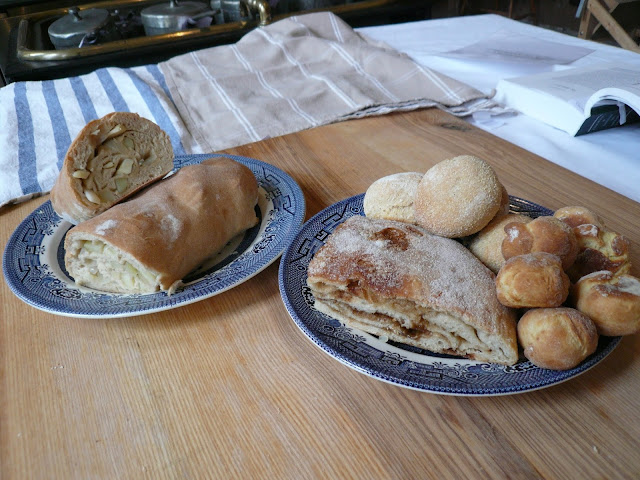
A selection of loaves created in the kitchens, including Cheats's Loaf and Manchet.


Drover's Bread. Traditionally made using beefsteak or mutton, this version was made with potatoes and onion, although any vegetables could be added to vary this bread. Simply roll out 1lb of bread dough, line your chopped ingredients onto the dough and season, before rolling it up into a sausage shape. Seal the ends before baking.


As well as loaves, Mrs Brown made some delicious bread rolls, including saffron cakes, polenta rolls, lardy cakes and tea cakes.

Yummy!

If this has inspired you to bake, have a go at one of Mrs Brown's recipes below and give Paul Hollywood a run for his money!

Sarah
Conservation Assistant

Cheat Loaf
Ingredients
1 1/2 lbs. Wholemeal flour / sieved course bran
3/4 to 1 pint  Warm Water
2 tsp Salt
1 tsp Sugar
2 1/2 tsp Dried Yeast

Method
Put the flour in a bowl, make a well in the centre and add the warm water. Stir to form a batter; cover with some of the flour and leave in a warm place overnight.
Add the yeast and sugar to 1/2 pint of warm water. Stir it before leaving for 15 minutes until frothy. Add the salt and knead everything together for 10 minutes.
Make into a large ball for a single loaf, or divide into 2 - 4 smaller loaves. Place on a baking sheet, cover, and leave until doubled in size.
Bake at 200°C / 400°F / Gas Mark 6 for 45 minutes.


Saffron Cakes
Ingredients
1 lb Flour
4 oz Butter
2 oz Sugar
3 Eggs + 2 Egg Yolks
1/4 pt Milk
1 tbsp Dried Yeast
1/2 tsp Ground Coriander
Large pinch of Saffron

Method
Warm the milk, saffron and sugar together before adding the yeast. Stir and leave, covered, until the yeast froths.
Whip the eggs together for 2-3 minutes; add them to the milk mixture with the flour and ground coriander.
Mix well before kneading on a board.
Once kneaded, place the mixture back into the bowl, cover, and leave to rice for 30-60 minutes.
Knead the mixture for a second time. Split into egg-sized rolls; put onto a greased baking tray, cover, and leave to rise for another 30-60 minutes.
Bake in a moderate - hot oven.


Yorkshire Tea Cakes
Ingredients
1 lb Flour
2 oz Melted butter
1/2 pt Milk
1 Egg
1 1/2 tbsp Fresh Yeast

Method
Rub the butter into the flour. Warm up half of the milk and add the yeast. Make a well in the centre of the flour, pour in the yeast milk and mix together.
Lightly sprinkle some flour onto the surface, cover with a cloth and leave somewhere warm for about an hour for the yeast to rise.
Beat the egg well, add a little salt and some of the warm milk. Add this to the dough and knead it until smooth. Leave to rise in a warm place for another hour,
Divide into 12 pieces, shape into flat rounds, and place on a baking tray. Cover and leave for 15 minutes.
Bake in a moderate oven for 30-40 minutes, not allowing them to brown too much.


Enjoy!


Monday, 16 September 2013

Behind closed drawers in the Red Room

For last week’s Conservation in Action, Michelle and I focused on the furniture in the Red Room. This gave our visitors a chance to see inside some of the wonderful pieces that we have in the collection, which are usually closed up.
The Red Room contains two sofa tables, both of English origin and made during the 19th century.

Open view of the sofa table. The central drawers are on a spring so that when the table is opened they can pop up. You can also just see the glass and silver inkwells that sit inside the desk.

A close-up of the sofa table when the writing desk is lifted.

A second sofa table that turns into a games table. The two side panels fold out and the central panel slides out and has a chess board on the reverse, which can be fitted as in the picture above.

Underneath the central panel is a backgammon board.

Two fantastic pieces of Boulle work furniture also feature; a bureau-plat and a sarcophagus-shaped commode.


This bureau-plat (writing table) is a 19th century copy of a regency-style table. Veneered in ebony, it is inlaid with Boulle work and tortoiseshell. It was purchased by the 2nd Lord Leconfield after the 1882 Hamilton Palace sale where the London dealer Colnaghi’s had bought it for £300.

This commode (chest of drawers) is dated to around 1710 and can firmly be attributed as original Boulle work. Two commodes feature at Versailles which are virtually identical and are the only surviving pieces of furniture known to have been made by Boulle himself. The Red Room commode was purchased by the 2nd Lord Leconfield from Colnaghi, after the Hamilton Palace sale in 1882, where this commode fetched the then enormous sum of £1081:10s.

Detail of the winged creatures which feature on the corners of the commode.

Andre-Charles Boulle (1642-1732)
Boulle was Louis XIV’s official ébéniste (cabinet maker) who gave his name to the technique of metal inlaid wood and tortoiseshell furniture. Find out more about him and his work at the Palace Of Versailles here.

There are plenty of other examples of the Boulle technique around Petworth, including other commodes, cabinets, desks and clocks.


Sarah
Conservation Assistant

Friday, 6 September 2013

Sculpture from up above

Last week’s conservation in action saw Michelle and I cleaning sculptures in the North Gallery from quite a height.

We focused on two of the sculptures in the Square (North) bay – Pandora and Prometheus and Vulcan, Venus and Cupid. These two sculptures, by Irish sculptor J.E. Carew, stand either side of the entrance to the bay.

It’s a good thing we’ve got a head for heights (or, at least, do now having been in this job for 6 months!), as to reach the top of the sculpture we needed to work on top of the scaffolding.

Cleaning the tops of Promethus and Pandora

We used a hog's hair brush and a vacuum cleaner to lift the dust away from the sculpture. The porous nature of the marble means we do not use any liquids on the statues. Wet cleaning has the potential to drive any dirt and stains further into the marble, creating more problems than it would solve.

Cleaning Vulcan!

Sculpted between 1827 and 1831, Venus, Vulcan and Cupid was commissioned as a pendant to Pandora and Prometheus, which was created between 1835 and 1837 and remained unfinished at the 3rd Earl of Egremont’s death. These two sculptures were intended for this space, before being moved to the Audit Room (now the National Trust Restaurant) in 1836-7. In 1992 they were restored to their original and current space in the North Gallery.

The Myths Behind the Sculptures

Prometheus and Pandora
In Roman mythology, Prometheus created the first man from clay, stole fire from the gods to give to mankind, was punished by Jupiter* and released from his torment by Hercules. His sister-in-law was Pandora, the ‘all-gifted’, who was fashioned from clay by Vulcan*. After Prometheus’s theft of fire, Jupiter’s retribution to mankind was the opening of Pandora’s box thus releasing all the world’s evils. Only Hope remained inside.
* NB: Jupiter is the Roman god; Zeus is his Greek equivalent.
Vulcan is the Roman god; Hephaestus is his Greek equivalent.
Venus, Vulcan and Cupid
Vulcan was the God of Fire and Blacksmith to the Gods. Carew has sculpted him seated on his anvil inscribed ‘AITNA’ – meaning the volcano Etna, located in Sicily – and resting on his hammer. His wife, Venus, and her son, Cupid accompany him.

Sarah
Conservation Assistant

Sunday, 1 September 2013

Jellies, Jellies, Everywhere!

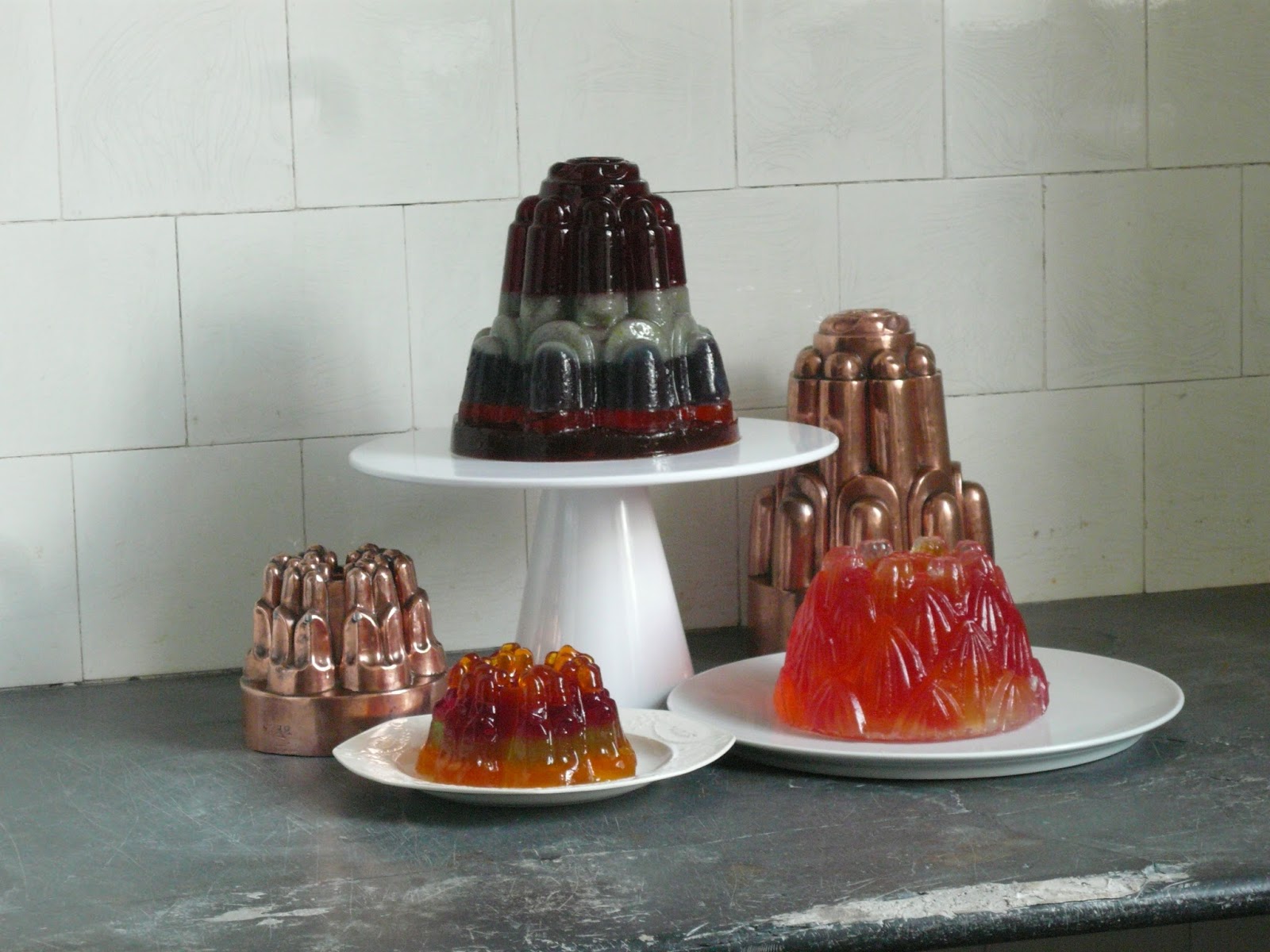
Last week, Mrs Brown and her team of helpers were busy making jellies in the historic kitchens. We started by going back to basics and making the very first type of jelly - a medieval meat jelly - before creating Tudor, Georgian and Victorian fashions. The time and dedication it took to set the gelatine used to make jelly - over ice - as well as the intricate patterns and designs - meant that jelly was a preserve of the rich and was a symbol of wealth and status.
Once you've browsed the gallery below, why not take a look at the Historic Food website for more traditional jelly creations! 

Sarah
Conservation Assistant (and new-found jelly enthusiast)
Visitors to the House on Saturday would have been greeted with the smell of pig as a head and trotters were boiled in order to make traditional brawn and meat jellies! Here Jacky is straining the mixture.
The result of the pig! A traditional meat jelly, set in one of the copper moulds from the kitchens.


Jacky prepares an eighteenth century dish of ham and eggs. An almond milk jelly is set inside emptied egg shells and arranged on a coloured almond jelly that has been chopped up to look like ham...
 
...The finished product was very convincing!

This eighteenth century chequered or 'ribboned' jelly is creating by setting different coloured layers of jelly in turn, before slicing them up, turning them around and resetting them with a clear jelly to create the chequered effect.


Caroline sets different coloured layers of jelly in small glasses...

...resulting in this stunning centre piece! A modern adaptation of a traditional Georgian fashion, where they had specific jelly stands with glasses set into the stand to hold the jellies.
Three different flavoured jellies made using the gelatine from the boiled up pig, including elderflower flavour and orange and cinnamon.
By the end of the week we were very much enjoying playing around with packet jellies and food colouring to create some jazzy effects! The top jelly here was made using a combination of packet jellies and whisked jellies, where we allowed each layer to set in turn before adding the next.

This jelly was made by setting lemon jelly and strawberry jelly in regular jelly moulds, chopping them up and placing some into a more intricate mould. We then poured a clear elderflower jelly around the other colours and allowed it to set. It created a lovely mosaic or stained-glass window effect.
 

Mrs Brown's Stripey Orange Jellies
  1. Cut the top off the orange and scoop out the flesh with a spoon.
  2. Make up some of your favourite jellies according to packet instructions - just don't pour it into the jelly mould!
  3. Take your first colour jelly and pour it into the orange. Put this in the fridge and allow it to set completely before repeating the process with another jelly. Try experimenting with different colours and flavours for different effects!


These impressive jellies are easy to make at home - why not have a go!


Tuesday, 27 August 2013

Ugly Bug Tea Party


Petworth House was overrun by creepy crawlies!

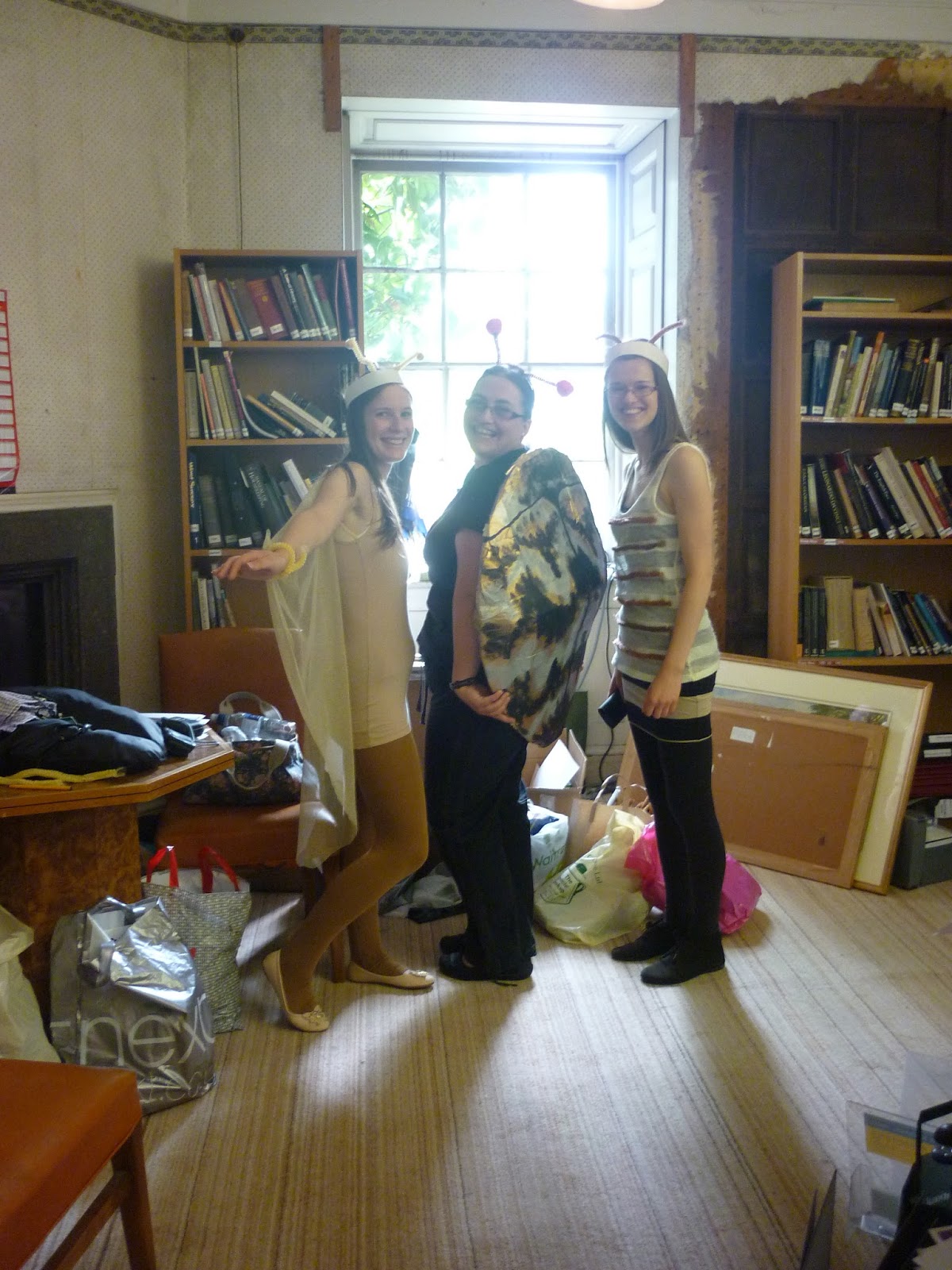
A few weeks ago the conservation team ran an Ugly Bug Tea Party throughout the house and courtyard, which has saw hundreds of new species of bugs made by some very creative minds! Outside in the courtyard, our younger visitors were transformed into technicolour beetles and moths.


We created an Ugly Bug Tea Party set so that our younger visitors could see the type of damage that silverfish, woolly bears and beetles can do given half the chance. They also had the opportunity to follow a trail round the house to see how the bugs have damaged Petworth’s collection in the past.

The bugs were having their very own tea party!
Looking at the old woodworm damage to the carvings in the Carved Room.
Live bugs were projected onto a big screen in the Marble Hall and visitors were invited to talk to the conservation team about the damage the pests generate, and what we do to limit this damage.


We certainly enjoyed the week, and by the number of 'bugs' running around the house, we hope that our visitors have too. We are certainly going to miss wearing our giant bug outfits!


Sarah
Conservation Assistant

Tuesday, 18 June 2013

Conservation in Action - A Sterling Job

This week, we’ve been concentrating on metals again, but this time the silver from the Square Dining Room. Visitors to Petworth on Monday, Tuesday or Wednesday afternoon last week would have seen us hard at work in the Marble Hall.


These solid silver wine coolers come from a set of four which currently stand on the side table along the south wall of the Square Dining Room. They were made by Paul Storr of London in 1814 and are decorated with the 3rd Earl of Egremont’s coat of arms. They were based on the Warwick Vase, an enormous antique marble which was once owned by the 2nd Earl of Warwick.


The same questions came up frequently whilst we were cleaning:


How do you clean the silver?

We start by flicking the dust off with a soft pony hair brush. The tarnish is removed by applying a small amount of Goddard’s silver dip with a cotton bud, which is then washed off with distilled water before being dried with paper towel.


Silver dip?! I've been told to not used silver dip?

We use the silver dip in a very controlled way. It is applied with a cotton bud or a barbeque skewer covered in cotton wool for the more intricate areas, and is immediately washed off with distilled water. Only a small area of the silver is worked on at a time so we can be sure all the dip is removed before we move on.

Caroline is using a barbeque skewer to get into the detail of the silver.


How often do you clean them?

As little as possible! We strive to maintain a suitable balance between keeping the silver aesthetically pleasing for our visitors whilst ensuring they are properly conserved and looked after. Taking off the tarnish means removing the top layer of the metal, so the silver is only cleaned when it really needs it. These specific wine coolers were last cleaned three years ago.


This photo shows how tarnished the piece had become over three years.


It was an absolute pleasure to work on these beautiful pieces of silver. Visitors often commented on the level of patience needed to work on the pieces, but we all found it very therapeutic!


Sarah Baldwin
Conservation Assistant

Monday, 10 June 2013

Father's Day at Petworth House

Treat your dad to an unforgettable Father's Day at Petworth House. What better way to spend your day than with a walk around Petworth Park, look out for the fallow deer, or even bring a picnic and relax in the beautiful surroundings (fingers crossed for some more decent summer weather). This Father's Day weekend, 15th and 16th June, will also see the Petworth House stables being brought to life by our historical interpreters and horses!  Enjoy an exciting and rare opportunity to explore the stables and discover their rich history - from racehorses to warhorses.


There's also plenty to see in the house, firm favourites with dads usually include the intricate Grinling Gibbons carvings in the Carved Room and the Molyneux globe, dated at 1592 it's possibly the earliest English globe in existence, supposedly given to The Wizard Earl by Sir Walter Raleigh during the time they spent in the tower together during the early 17th century.


What will you discover?

Monday, 3 June 2013

Conservation in Action - Going Copper Crazy!


Every other Wednesday afternoon, some of the conservation team clean pieces of the collection in front of visitors. This week, myself, Michelle, Brian – a dedicated volunteer – and some of our younger visitors were hard at work in the servant’s quarters.


 Anyone who has visited the kitchens at Petworth knows that we have quite a large collection of copper! Whilst a lot of it got cleaned during the winter clean, many of the smaller pieces were still awaiting our attention.


This week we focused on the little pastry and jelly moulds – some of which are very intricate! We had quite a lot of fun discussing the creations that could have been made by combining the products of the moulds!

Whilst we are cleaning we are keen to answer any questions from visitors. These are some of the most frequently asked questions.

What do you use to clean?”
First, the piece is dusted using a hog’s hair brush. A small amount of Autosol metal polish is applied, in order to remove corrosion, stains or tarnish that may be present on the item. Once the polish has been buffed away, a thin layer of renaissance wax is applied, in order to seal and protect the metal.

How often?”
It is important that the copper is not over-cleaned, as every time polish is applied and buffed away, a layer of copper gets removed. We treat the copper annually – which is quite enough to keep us going!

And perhaps the most commonly asked question:
Do you fancy coming over to clean my copper?!” 
Thanks for the offer - but we have enough here to keep ourselves busy!

Sarah 
Conservation Assistant

Every other Wednesday we clean a different part of the collection in front of visitors during our 'Conservation in Action' events. Keep an eye out around the property to find out what we are cleaning next!